Basque Country 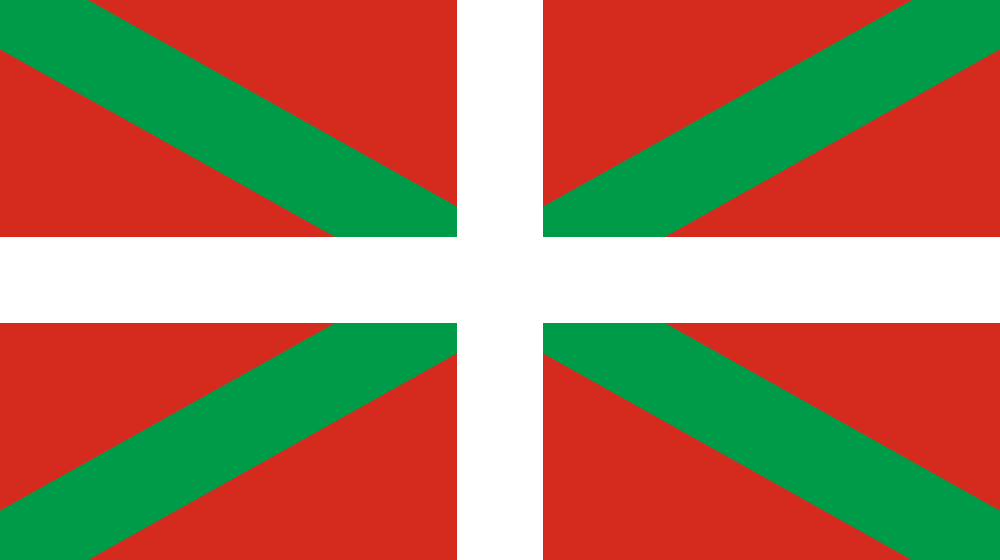
The Basque Country, Euskadi in Basque and País Vasco in Spanish, is the Atlantic autonomous community in the far north of Spain, facing the Bay of Biscay. Official Basque Government tourism calls this shore the Basque Coast: green hills, working harbours, surfing towns and cliff walks rather than a long Mediterranean promenade. The community is made up of three historic territories, Bizkaia, Gipuzkoa and inland Álava, whose capital Vitoria-Gasteiz is also the seat of the Basque Government. This site covers the two coastal provinces that already have published beach pages here. The entire region is steeped in history and has an abundance of historical buildings, monuments and industrial landmarks, from walled Hondarribia to the iron transporter bridge over the Abra. Its villages, towns and cities offer visitors a virtual smorgasbord of mouthwatering cuisine and regional wines, from pintxos and cider houses to txakoli. There is a great choice of museums and art galleries, and children and adults alike will enjoy the beaches, coastal paths and family resorts. The region's cities entice visitors with elegant shops and boutiques, and in Bilbao and Donostia the evenings continue until the small hours.
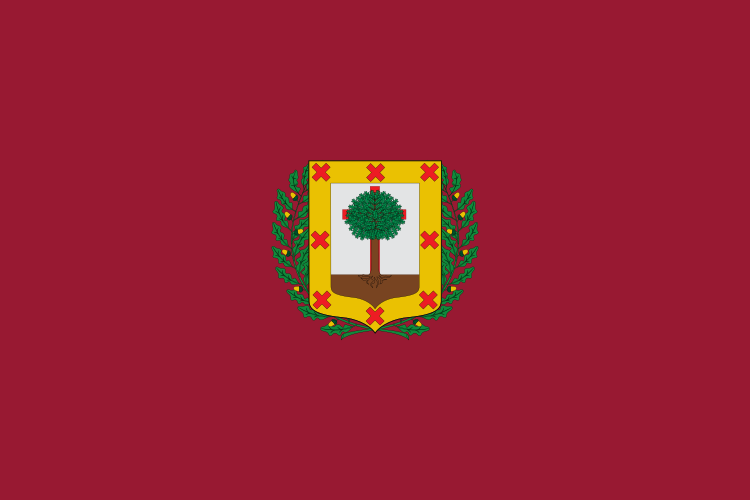
The province of Bizkaia wraps Bilbao and the short Uribe shore west of the Abra estuary. Throughout the coastal towns are popular seaside resorts and everyday commuter beaches, and tourism sits beside fishing, industry and the port. Bilbao is the provincial capital, a major estuary city and the site of the community's busiest international airport at Loiu. It is famous for the Guggenheim Museum Bilbao, opened in 1997, and for a rebuilt riverside that visitors now walk as readily as they once walked the old Casco Viejo. Getxo, on the opposite bank of the Ibaizabal mouth, shares UNESCO's Vizcaya Bridge of 1893 with Portugalete. Official Basque tourism names a nudist area on Barinatxe, the wild sand between Getxo and Sopela, and calls Meñakoz a nudist pebble beach on the Barrika-Sopela cliffs. Throughout the province, visitors are enticed to spend lazy days soaking up the sun on one of the area's popular beaches or go for an all over tan with a choice of 6 nudist beaches in Bizkaia.
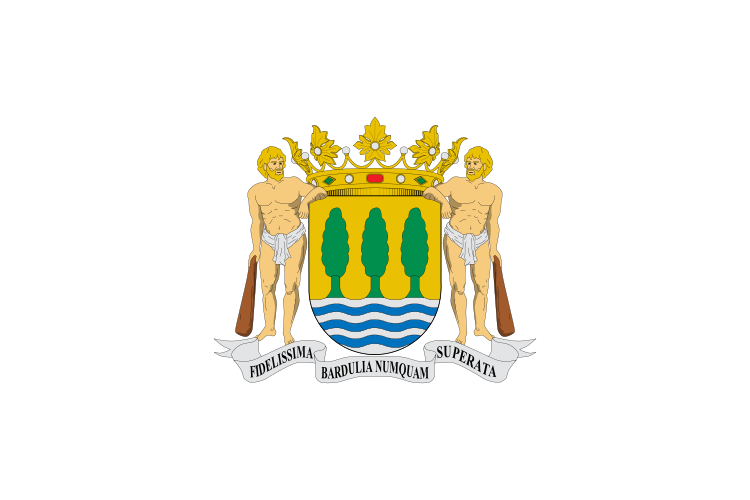
The province of Gipuzkoa is the eastern Basque Coast, from the Deba flysch to the Bidasoa and the French border. Donostia/San Sebastián, the provincial capital, sits on a scalloped bay with La Concha, Ondarreta and Zurriola, a harbour and the sculpture of the Comb of the Wind at the foot of Igeldo. Official Basque Coast copy treats the city as a family and food destination as well as a surf town. Further west, Mutriku, Deba and Zumaia form the Basque Coast UNESCO Global Geopark, inscribed in November 2015, whose flysch cliffs record tens of millions of years of Earth history. Zarautz holds Gipuzkoa's longest urban sand. Hondarribia keeps a walled old town above Txingudi Bay, with San Sebastián Airport on the same municipal shore. There are also 20 nudist beaches in Gipuzkoa.
The Basque Country offers visitors an excellent selection of holiday options and destinations for all the family to enjoy. An area steeped in history, amidst spectacular countryside and ringed by a diverse choice of seaside resorts and fishing villages, offering some of Spain's most beautiful Atlantic beaches and secluded coves. Visitors have a good choice of busy family orientated beaches, tranquil bays and coves as well as a large selection of nudist beaches in the Basque Country. Official tourism lists nudism as a service on several named strands; others appear because Spain's Guía de Playas records practised or partial use. This site lists 26 nudist beaches in 10 municipalities across the two coastal provinces.