Galicia 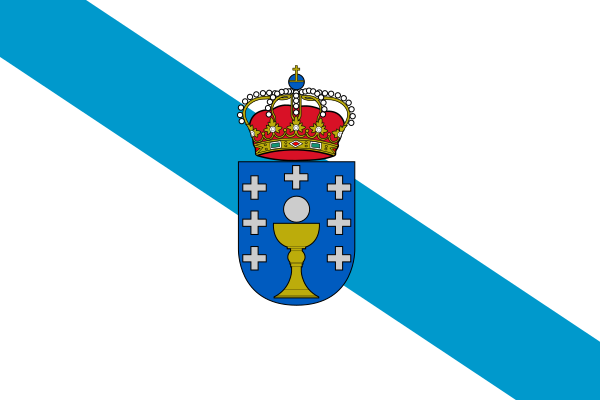
Galicia encompasses Spain's longest Atlantic shore, from the Rías Baixas in the south to the Mariña Lucense in the north, by way of the Rías Altas and the Costa da Morte. This stretch of coastline consists of the provinces of A Coruña, Lugo and Pontevedra, with inland Ourense completing the autonomous community. The Xunta records about 2,555 kilometres of litoral when islands, marshes and sands are counted with the coastal perimeter, a figure set out in the 2023 Law on the integrated management of the Galician shore. Galicia is a historic Atlantic country of granite towns, deep rías and a civic culture that visitors notice from the first market square. The entire region is steeped in history and has an abundance of historical buildings, monuments and ancient ruins, from the Tower of Hercules and the Roman walls of Lugo to the Old Town of Santiago de Compostela, inscribed by UNESCO in 1985. Its villages, towns and cities offer visitors a virtual smorgasbord of mouthwatering cuisine and regional wines, from pulpo á feira to the Albariño of the Rías Baixas. There is a great choice of museums and art galleries, and the region is home to some of Spain's most distinctive festivals and fiestas, including the Camino de Santiago, which still draws walkers to the cathedral at Obradoiro. Children and adults alike will enjoy the beaches, island day trips, coastal walks and family resorts. The region's cities entice visitors with elegant shops and boutiques, and in Vigo and A Coruña the nightlife continues until the small hours.
The province of A Coruña wraps the Gulf of Ártabro and a long, well-connected shore, from the Ferrolterra and the rías of Ares and Betanzos in the north to the Barbanza and the ría of Muros-Noia in the south. Throughout the coastal regions are fishing ports and summer towns, and tourism sits beside fishing, shipyards and everyday commuting. Santiago de Compostela is the capital of Galicia and sits inland in this province, a major pilgrimage city and the site of the community's busiest international airport. A Coruña city is famous for the Tower of Hercules, a UNESCO World Heritage lighthouse, and for its glass galleries on the harbour. Visitors are never far from a ría: Oleiros and Sada face the capital, Ferrol remains a naval city, and Porto do Son keeps the Castro de Baroña on a rocky peninsula. Throughout the province, visitors are enticed to spend lazy days soaking up the sun on one of the area's popular beaches or go for an all over tan with a choice of 20 nudist beaches in A Coruña.
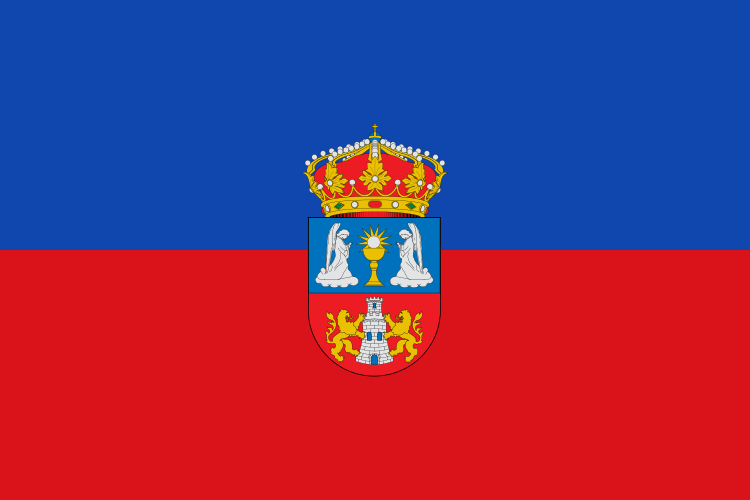
The province of Lugo is the Cantabrian face of Galicia, a short, green shore known as A Mariña, with most of the province lying inland among mountains and the Roman city of Lugo. UNESCO inscribed the Roman walls of Lugo in 2000, a complete circuit that still walks the historic centre. The coastal strip is quieter than the Rías Baixas, a succession of fishing towns, dunes and rock-cut coves between Ribadeo and the ría of Foz. This site lists a single Mariña municipality. There is also 1 nudist beach in Lugo.
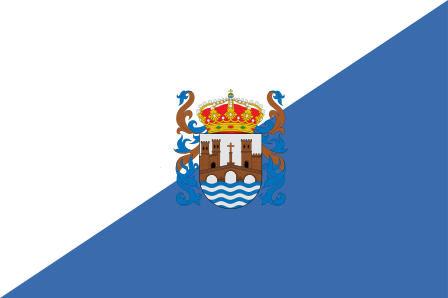
The province of Pontevedra occupies southern Galicia, from the golden sands and pine woods of the Rías Baixas to the Atlantic Islands National Park. Pontevedra city is the provincial capital, a compact stone centre of squares and arcades; Vigo, a little further south, is Galicia's largest city, a major port and the usual air gate at Peinador. Official Galician tourism describes the Costa da Vela, at the western tip of the Morrazo, as an untouched world of pines, cliffs and clear water, with Barra named as a nudist beach. The Cíes and Ons islands belong to the maritime-terrestrial national park and need a booked visit. Inland lie Albariño vineyards and the O Salnés towns. There are also 12 nudist beaches in Pontevedra.
Galicia offers visitors an excellent selection of holiday options and destinations for all the family to enjoy. An area steeped in history, amidst spectacular countryside and ringed by a diverse choice of seaside resorts and fishing villages, offering some of Spain's most beautiful beaches and secluded coves. Visitors have a good choice of busy family orientated beaches, tranquil bays and coves as well as a large selection of nudist beaches in Galicia. This site lists 33 nudist beaches in 18 municipalities across the three coastal provinces.