Canary Islands 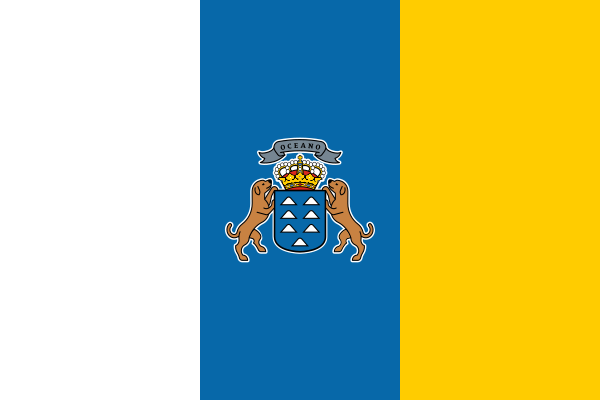
This starter hub currently lists 171 published beach pages already stored in the directory. It is not a complete inventory.
- Faneroque
- Guayedra
- Punta Gorda
- Sotavento
- Playa de las Arenas
- La Fuente
- Las Salinas
- Arrastradero
- Caletón de los Cangrejos
- La Guancha
- La Redonda
- Lagarto
- Paso del Salgo
- Baja Piquiento
- Caleta de José María
- Caleta del Mojón
- Caleta González
- Caletón Blanco
- Charco del Palo (Piscina)
- De Seifio
- El Banquito
- El Embarcadero
- El Risco
- La Caleta
- La Cantería
- Los Bonacibles
- Los Caletones
- Playa de Punta del Palo
- Playa de Punta Prieta
- Playa Marina
- Punta Escamas
- Punta Prieta
- Punta Usaje
- Vaya Querida
- Aneas
- Descojonado
- Güi- Güi Chico
- Güi- Güi Grande
- Lioguicha
- Tasartico
- Alzada
- Beatriz
- El Aljibe
- El Bajo Negro
- El Caserón
- El Castillo
- El Charcón
- El Dormidero
- El Islote
- El Moro
- El Pozo
- El Río
- El Rosadero
- El Viejo
- La Barra
- Larga
- Los Charcos I
- Los Charcos II
- Los Charcos III
- Los Martos
- Marfolín
- Medano
- Playa de Esquinzo
- Playa de los mallorquines
- Playa del Aguila
- Playa del Hierro
- Playa del Tebeto
- Punta Blanca
- Ambar
- Los Frailes
- Los Secos
- Medio Almud
- Perchel
- Tiritaña
- Veneguera
- Butihondo
- El Cofete
- El Viejo Rey
- Las Coloradas
- Morro de Potala
- Sotavento
- Ugan
- Janubio
- El Molinero
- Las Carpinteras
- Llanillo
- Lomo Galeón
- Los Bigotes
- Maspalomas
- Montaña de Arena
- Pocilla Beda
- Triana
- Punta del Angosto
- Bajo Raso
- Barranco de los Conejos
- Caleta de Arriba
- Charco del Palo (Charca natural)
- El Ancla
- El Perejil
- El Salado
- Ensenada de las Caletas
- Famara
- Francesa
- Isla de la Alegranza
- La Cocina
- Lambra
- Las Conchas
- Las Palomas
- Morros Negros
- Playa Baja del Ganado
- Playa de los Conejos
- San Juan
- Tía Vicenta
- Tío Joaquín
- Barranco del Burro
- Caleta del Mariscadero
- La Madera
- La Santa (Pueblo)
- Las Malvas
- Los Risquetes
- Pico Alto
- Piedra Mansa
- Barranco de las Pilas
- Caleta del Congrio
- Caleta del Fuego
- Caleta Larga
- Caletón de San Marcial
- Caletón del Cobre
- El Cohon
- El Papagayo
- El Parrado
- El Pasito
- El Pozo
- El Valle de la Casa
- La Arena
- La Campana
- La Cera
- La Colorada
- La Cruz
- La Fuentecita
- La Mulata
- Montaña Bermeja
- Mujeres
- Paso
- Playa del Cochino
- Puerto Muelas
- Diego Hernández
- Cueva de la Arena
- El Callao
- Los Enojados
- Playa de Punta Larga
- La Garañona
- La Pelada
- La Rajita
- La Tejita
- El Ancón
- Los Patos
- Las Monjas
- Castro
- Playa Gordejuela
- Troche
- Avalo
- La Guancha
- Antequera
- Benijo
- El Draguillo
- Fabián
- Las Gaviotas
- Tamadite
- Los Tarajales
- El Inglés
Published starter pages in this tree: Las Palmas, Santa Cruz de Tenerife.
The Canary Islands are Spain's Atlantic archipelago, an autonomous community of eight islands including La Graciosa, with a mild year-round climate that official tourism still calls an eternal spring. The coastline belongs to the two historic provinces of Las Palmas and Santa Cruz de Tenerife. Las Palmas gathers Gran Canaria, Fuerteventura and Lanzarote, with La Graciosa and the Chinijo islets administered from Teguise. Santa Cruz de Tenerife gathers Tenerife, La Palma, La Gomera and El Hierro, though this site does not yet open an El Hierro municipality. The islands received their modern Statute of Autonomy in 1982. Official PROMOTUR copy notes eight airports and frequent hops of less than an hour between islands, as well as ferry links from Andalusia and among the ports. Children and adults alike will enjoy the dunes, pine forests, volcanic parks and fishing villages. The entire region is steeped in history, from Berber-rooted archaeology and the Castilian conquest to Columbus's Atlantic staging posts, and its towns offer a virtual smorgasbord of wrinkled potatoes, fresh fish, island cheeses and malvasía wines.
The province of Las Palmas is the eastern trio of larger islands. Gran Canaria is the official 'miniature continent', a day's journey from the Maspalomas dunes to the Tamadaba pines and the Risco Caído sacred mountains, a UNESCO World Heritage cultural landscape. Las Palmas de Gran Canaria is the provincial capital and a lively port city, though it is not itself a hub on this site; visitors fly into Gando and spread south to the resorts or north to the darker volcanic coves. Fuerteventura is the long, windy beach island, with Corralejo's dune park in the north and the Jandía peninsula in the south. Lanzarote is César Manrique's volcanic island of Timanfaya, white villages and the Ajaches coves around Papagayo, plus the ferry from Órzola to La Graciosa. Throughout the province, visitors are enticed to spend lazy days on family sands or go for an all over tan with a choice of 146 nudist beaches in Las Palmas.
The province of Santa Cruz de Tenerife occupies the western islands. Tenerife holds Teide, the highest mountain in Spain at about 3,718 metres, inscribed by UNESCO as a World Heritage national park in 2007, and the colonial street grid of San Cristóbal de La Laguna, inscribed in 1999. Santa Cruz de Tenerife city is the provincial capital and a cruise port under the Anaga mountains. Two airports serve the island, Los Rodeos in the north and Reina Sofía in the south. La Palma is the steep 'isla bonita' of caldera forests and a west-coast banana shore; La Gomera is the green circular island of Garajonay, a UNESCO laurel-forest park, with its capital at San Sebastián. Official tourism presents the whole archipelago as a family destination of hiking, stargazing and beach days. There are also 25 nudist beaches in Santa Cruz de Tenerife.
The Canary Islands offer visitors an excellent selection of holiday options and destinations for all the family to enjoy. An area of volcanoes and trade winds, ringed by a diverse choice of seaside resorts and fishing villages, offering some of Spain's most open Atlantic beaches and secluded calas. Visitors have a good choice of busy family orientated beaches, dune walks and remote coves as well as a large selection of nudist beaches in the Canary Islands. This site lists 171 nudist beaches in 29 municipalities across the two provinces. The Guía de Playas, Spain's official beach inventory, records nudism as practised on these imported shores; a smaller number are also described as nudist zones by island or municipal tourism, and those wordings are cited on the relevant town pages.